Showing posts with label ethnic studies. Show all posts

Waiting for Gautreaux: A Story of Segregation, Housing, and the Black Ghetto Review

Waiting for Gautreaux: A Story of Segregation, Housing, and the Black Ghetto
Average Reviews:

(More customer reviews)
Are you looking to buy Waiting for Gautreaux: A Story of Segregation, Housing, and the Black Ghetto? Here is the right place to find the great deals. we can offer discounts of up to 90% on Waiting for Gautreaux: A Story of Segregation, Housing, and the Black Ghetto. Check out the link below:

>> Click Here to See Compare Prices and Get the Best Offers

Waiting for Gautreaux: A Story of Segregation, Housing, and the Black Ghetto ReviewThis book is excellent portrayal of the events around the saga that was the Gautreaux case. Not only did this case change the law, but ultimately thousands of lives in the city of Chicago. Alex Polikoff's narrative is easy to read and he reveals an insider's perspective of the machinations in the halls of power from Mayor Daley's City Hall to the Supreme Court of the United States. For anyone acquainted with or interested in segregation, urban development, and welfare reform, this book represents an excellent addition to one's library.Waiting for Gautreaux: A Story of Segregation, Housing, and the Black Ghetto Overview

Want to learn more information about Waiting for Gautreaux: A Story of Segregation, Housing, and the Black Ghetto?

>> Click Here to See All Customer Reviews & Ratings Now
Read More...

Slim's Table: Race, Respectability, and Masculinity Review

Slim's Table: Race, Respectability, and Masculinity
Average Reviews:

(More customer reviews)
Are you looking to buy Slim's Table: Race, Respectability, and Masculinity? Here is the right place to find the great deals. we can offer discounts of up to 90% on Slim's Table: Race, Respectability, and Masculinity. Check out the link below:

>> Click Here to See Compare Prices and Get the Best Offers

Slim's Table: Race, Respectability, and Masculinity ReviewI've read other sociological works on inner city residents and was invariably disturbed by the soulless way in which the subjects were portrayed. No doubt, the authors of those works would defend their method as being objective and showing rigor. However, at some level, the objectivity becomes stultifying and numbing.
Duneier cuts through all of this by portraying real people as human beings for whom he cares deeply. At the same time, he is able to pull back from the personal stories and draw conclusions that are intellectually sound. One feels a deep sense of pride in the men whose lives are profiled in Slim's Table and a lingering sense of regret that they seem to be a dying breed.
This book is the rare work that appeals in equal parts to the intellect and the soul.Slim's Table: Race, Respectability, and Masculinity Overview

Want to learn more information about Slim's Table: Race, Respectability, and Masculinity?

>> Click Here to See All Customer Reviews & Ratings Now
Read More...

White Field, Black Sheep: A Lithuanian-American Life Review

White Field, Black Sheep: A Lithuanian-American Life
Average Reviews:

(More customer reviews)
Are you looking to buy White Field, Black Sheep: A Lithuanian-American Life? Here is the right place to find the great deals. we can offer discounts of up to 90% on White Field, Black Sheep: A Lithuanian-American Life. Check out the link below:

>> Click Here to See Compare Prices and Get the Best Offers

White Field, Black Sheep: A Lithuanian-American Life ReviewI tried to read this book slowly. I did not want it to end. I put off reading the last ten pages for a week or so. I was in denial, hoping I could hang on just a little longer, hoping I had more time with this book. A theme so perfect after I actually finished the book. A mutual feeling, this hanging on, I think, shared with the author.
I learned so much about Lithuanian culture, something I hadn't given much though to, but fell in love with while reading. This book is so sweet, dedicated to her mother, who Daiva paints a beautiful picture of. Although I am not Lithuanian, I thank you for writing this, documenting your heritage. This book seems very important to me.White Field, Black Sheep: A Lithuanian-American Life Overview

Want to learn more information about White Field, Black Sheep: A Lithuanian-American Life?

>> Click Here to See All Customer Reviews & Ratings Now
Read More...

Nature Religion in America: From the Algonkian Indians to the New Age (Chicago History of American Religion) Review

Nature Religion in America: From the Algonkian Indians to the New Age (Chicago History of American Religion)
Average Reviews:

(More customer reviews)
Are you looking to buy Nature Religion in America: From the Algonkian Indians to the New Age (Chicago History of American Religion)? Here is the right place to find the great deals. we can offer discounts of up to 90% on Nature Religion in America: From the Algonkian Indians to the New Age (Chicago History of American Religion). Check out the link below:

>> Click Here to See Compare Prices and Get the Best Offers

Nature Religion in America: From the Algonkian Indians to the New Age (Chicago History of American Religion) ReviewCatherine Albanese's treatise on Nature Religion in the U.S. is probably her best known work, although it is by no means her only area of focus. In this volume, she defines and defends what she calls "Nature Religion."
And its an impressive set of drawn-out sketches and themes-- admittedly just one of many possible ways to map this space. Algonkian Amerindian religion is impressively overviewed, and the role of "Nature" here (a European concept) is dissolved into a complex interlocking set of relationships between Powers, Places, and Persons, both Human and Other-Than-Human. For the Puritans, Nature was abstracted into all that was "Other," usually a place of wilderness and evil--a Place to be feared. Although, as Albanese points out, precedents exist in Christian history for the wilderness as a place of testing and purification. The new republicanism from the conservative American "revolution" fostered a "wilderness eucharist" mentality--holding Nature sacred as something to be ingested, thereby becomed (and overcomed).
Yet other turns no less revelant today are covered. Transcendentalism and its associated 'heathen' ambiguous reverance for Nature are documented, both in the paradoxical sense of Nature as the Ultimate and Nature as a illusion (or correspondence for the Ultimate. Both of these senses are inherited in contemporary Goddess worship and the different, but related phenomenon of New Age religion, while each of them individually leads Albanese to wilderness preservation ideology and Christian Science/Mind cure movements.
For Albanese, this protean concept contains its own multivalency, its own pluralism, and therefore tends to recede in influence and importance the more a particular offshoot institutionalizes and fossilizes. It is a voice more suited to a prophetic mindset than a priestly mindset, although that too could be possible, it seems. Excellent and challenging work to uncover and begin to document this counter-covenantal thread throughout American history and religion. Albanese freely admits to inventing the term herself--but she is correct in that using it as a frame of reference, for both elite and popular culture, for both empirical and cultural facts, tells us something very important about religion in the United States.Nature Religion in America: From the Algonkian Indians to the New Age (Chicago History of American Religion) Overview

Want to learn more information about Nature Religion in America: From the Algonkian Indians to the New Age (Chicago History of American Religion)?

>> Click Here to See All Customer Reviews & Ratings Now
Read More...

Producing Local Color: Art Networks in Ethnic Chicago Review

Producing Local Color: Art Networks in Ethnic Chicago
Average Reviews:

(More customer reviews)
Are you looking to buy Producing Local Color: Art Networks in Ethnic Chicago? Here is the right place to find the great deals. we can offer discounts of up to 90% on Producing Local Color: Art Networks in Ethnic Chicago. Check out the link below:

>> Click Here to See Compare Prices and Get the Best Offers

Producing Local Color: Art Networks in Ethnic Chicago ReviewI thoroughly enjoyed this book and was 'reeducated' by reading it. It made me much more aware of the decentralized ethic pockets of culture that exist within a city. Downtown invariably has an homogenized culture of museums and institutions that are an extension of white, European heritage, which may not even reflect the make-up most of those living within a city like Chicago. Outlying, local cultural centers and museums can be much more responsive to the communities in which they exist and correspondingly have a greater impact on people's lives. Producing Local Color was an eye-opener. It has reoriented my thinking about how culture functions within a city. Probably worth reading again.Producing Local Color: Art Networks in Ethnic Chicago Overview

Want to learn more information about Producing Local Color: Art Networks in Ethnic Chicago?

>> Click Here to See All Customer Reviews & Ratings Now
Read More...

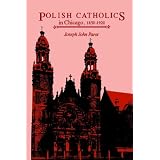
POLISH CATHOLICS IN CHICAGO: A RELIGIOUS HISTORY Review

POLISH CATHOLICS IN CHICAGO: A RELIGIOUS HISTORY
Average Reviews:

(More customer reviews)
Are you looking to buy POLISH CATHOLICS IN CHICAGO: A RELIGIOUS HISTORY? Here is the right place to find the great deals. we can offer discounts of up to 90% on POLISH CATHOLICS IN CHICAGO: A RELIGIOUS HISTORY. Check out the link below:

>> Click Here to See Compare Prices and Get the Best Offers

POLISH CATHOLICS IN CHICAGO: A RELIGIOUS HISTORY ReviewI am completely satisfied with the service from this vendor. The book arrived very quickly and in very good condition. It's also been helpful to me in my genealogy research. I would recommend the book and the vendor.POLISH CATHOLICS IN CHICAGO: A RELIGIOUS HISTORY Overview

Want to learn more information about POLISH CATHOLICS IN CHICAGO: A RELIGIOUS HISTORY?

>> Click Here to See All Customer Reviews & Ratings Now
Read More...

What Parish Are You From?: A Chicago Irish Community and Race Relations Review

What Parish Are You From: A Chicago Irish Community and Race Relations
Average Reviews:

(More customer reviews)
Are you looking to buy What Parish Are You From: A Chicago Irish Community and Race Relations? Here is the right place to find the great deals. we can offer discounts of up to 90% on What Parish Are You From: A Chicago Irish Community and Race Relations. Check out the link below:

>> Click Here to See Compare Prices and Get the Best Offers

What Parish Are You From: A Chicago Irish Community and Race Relations Review"What Parish are You From", a powerhouse of sensitivity, insight and humanitariansim, describes the fatherly role of the Catholic Church in immigrant America, how forces both inside and out of the realm of Catholocism were faced and how finally the neighborhoood ethnic Catholic churches met their Waterloo. The diluted essence of a neighborhood church changed the relationship of parishoner to parish forever...it was no longer able to "shelter" its people.What Parish Are You From: A Chicago Irish Community and Race Relations Overview

Want to learn more information about What Parish Are You From: A Chicago Irish Community and Race Relations?

>> Click Here to See All Customer Reviews & Ratings Now
Read More...

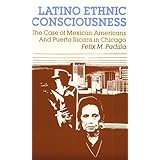
Latino Ethnic Consciousness: The Case of Mexican Americans and Puerto Ricans in Chicago Review

Latino Ethnic Consciousness: The Case of Mexican Americans and Puerto Ricans in Chicago
Average Reviews:

(More customer reviews)
Are you looking to buy Latino Ethnic Consciousness: The Case of Mexican Americans and Puerto Ricans in Chicago? Here is the right place to find the great deals. we can offer discounts of up to 90% on Latino Ethnic Consciousness: The Case of Mexican Americans and Puerto Ricans in Chicago. Check out the link below:

>> Click Here to See Compare Prices and Get the Best Offers

Latino Ethnic Consciousness: The Case of Mexican Americans and Puerto Ricans in Chicago ReviewFelix Padilla's 1985 classic stands as the first and,even today, one of the few social science studies on the dynamics and formation of a pan-Latino ethnic identity. Padilla's study is set in Chicago and examines the structural conditions and social inequalities endured by Chicanos and Puerto Ricans in the Windy City throughout the 1950s, 60s, and 70s; these inequities fostered the emergence of a new Latino ethnic identity and mobilization in the 1970s that transcended individual Mexican and Puerto Rican identity.
Padilla contends that a pan-ethnic Latino identity emerges when two or more Spanish-speaking ancestry populations are confronted with similar social conditions (such as poverty, discrimination, or poor educational facilities). Such conditions may serve as a basis for solidarity and unity between two or more Spanish-speaking groups (in this case Chicanos and Boricuas) as they unite to seek redress for such grievances. As the old saying goes, "there is strength in numbers."
Padilla points out that there are two basic models of Latinismo: the ascribed model and the emergent model. The ascribed model seeks ethnicity as a primordial category; Latinos constitute an a priori ethnic group based on Spanish as a cultural commonality. On the other hand, the emergent model and its adherents see Latino pan-ethnicity as a socially constructed concept that arises when Mexicans, Puerto Ricans, Dominicans, etc unite in efforts to challenge systematic inequalities that they face. Padilla clearly favors the emergent model, although he does not totally discard the ascribed framework - pointing out that many "Latinos" cherish Spanish as a key element of symbolic ethnicity.
Padilla does a great job in detailing the emergence of a pan-Latino ethnic identity among Chicanos and Puerto Ricans in Chicago during the 1970s. The move towards a pan-Latino identity originated in the early 1970s when Mexicans and Puerto Ricans unitied to challenge discrimination in Chicago's white collar employment sector. Federal affirmative action policy enhanced efforts towards pan-Latino unity as it legitimized and confirmed claims of inequality and discrimination. The sucess of early efforts in opening up new job opportunities for Mexicans and Puerto Ricans was taken as proof that pan-Latino unity held promise in fighting racial and ethnic discrimination.
Padilla's book is important because, all too often, larger American society uses the label "Latino" indiscriminately - implying that Mexicans, Puerto Ricans, Cubans, Dominicans, etc. are automatically a unified, homogenous group. Nothing could be further from the truth. A homogenous "Latino" culture does not exist, cultural differences and differences in historical experiences mark each group that is encompassed under the rubric of "Latino." Examing the experiences and social history of, for example, Puerto Ricans and labeling it as "Latino culture" or "Latino history" is misleading and a misnomer, as Puerto Rican experience in the United States is vastly different from Cuban experiences and Chicano experiences. Padilla argues that social scientists and the media must stop using the label "Latino" indiscriminately and realize that this pan-ethnic label is a political phenomenon that denotes a conscious attempt at inter-group unity to achieve a collective goal. As such, scholars should dedicate themselves to investigating the factors and conditions that serve to promote attempts at "Latino" unity.
I strongly suggest reading this book in conjunction with "Latino Crossings" by Nicholas DeGenova and Ana Ramos-Zayas. While Padilla focuses on the conditions that foster pan-Latino unity, DeGenova and Ramos-Zayas examine factors that impede and prevent such unity (inter-group prejudice and stereotypes being the main culprit to such efforts).Latino Ethnic Consciousness: The Case of Mexican Americans and Puerto Ricans in Chicago Overview

Want to learn more information about Latino Ethnic Consciousness: The Case of Mexican Americans and Puerto Ricans in Chicago?

>> Click Here to See All Customer Reviews & Ratings Now
Read More...

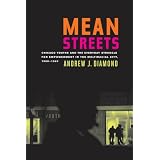
Mean Streets: Chicago Youths and the Everyday Struggle for Empowerment in the Multiracial City, 1908-1969 (American Crossroads) Review

Mean Streets: Chicago Youths and the Everyday Struggle for Empowerment in the Multiracial City, 1908-1969 (American Crossroads)
Average Reviews:

(More customer reviews)
Are you looking to buy Mean Streets: Chicago Youths and the Everyday Struggle for Empowerment in the Multiracial City, 1908-1969 (American Crossroads)? Here is the right place to find the great deals. we can offer discounts of up to 90% on Mean Streets: Chicago Youths and the Everyday Struggle for Empowerment in the Multiracial City, 1908-1969 (American Crossroads). Check out the link below:

>> Click Here to See Compare Prices and Get the Best Offers

Mean Streets: Chicago Youths and the Everyday Struggle for Empowerment in the Multiracial City, 1908-1969 (American Crossroads) ReviewI couldn't disagree more with the previous review. I found the prose somewhat dense at times, but for the most part clear and convincing. More importantly, this book is based on an enormous body of rich data, and, unlike many historians, the author is not afraid to bring complex theoretical insights to the stories he is revealing. As someone who works on youth issues, I was convinced by the book's pathbreaking move to place youths and street culture at the center of our understanding of racial identity and neighborhood politics. I was also impressed by the author's ability to move from the story of European immigration in the early twentieth century all the way through the era of civil rights and white backlash without losing any precision. I would recommend this book to anyone working on urban politics and culture in the twentieth century.Mean Streets: Chicago Youths and the Everyday Struggle for Empowerment in the Multiracial City, 1908-1969 (American Crossroads) Overview

Want to learn more information about Mean Streets: Chicago Youths and the Everyday Struggle for Empowerment in the Multiracial City, 1908-1969 (American Crossroads)?

>> Click Here to See All Customer Reviews & Ratings Now
Read More...

Chicago's Polish Downtown (IL) (Images of America) Review

Chicago's Polish Downtown (IL) (Images of America)
Average Reviews:

(More customer reviews)
Are you looking to buy Chicago's Polish Downtown (IL) (Images of America)? Here is the right place to find the great deals. we can offer discounts of up to 90% on Chicago's Polish Downtown (IL) (Images of America). Check out the link below:

>> Click Here to See Compare Prices and Get the Best Offers

Chicago's Polish Downtown (IL) (Images of America) ReviewSize doesn't always matter. Sixty years ago, the head of the world's biggest country sneered at the number of divisions of the world's smallest country. Half a century later, that leader and that state found themselves in the dustbin of history, consigned there in no small measure, many claim, by their Lilliputian adversary. Size does not matter as much as influence. The Vatican may be smaller than many American farms, but those 106 acres are influential far beyond Bernini's Colonnade.
The same can be said, with regard to American Polonia, about Chicago's Polish downtown.
As Victoria Granacki points out, Chicago's Polish downtown (which is actually on the city's northwest side) was more or less bounded by Ashland, Division, and Milwaukee Avenues "and stretched for not much more than a half mile in any direction" (p. 6). But size doesn't matter: the influence of those blocks on the history of American Polonia is inestimable. Granacki does not exaggerate when she sums up that history thusly: "[T]hough the physical size of the neighborhood was compact, its influence was far-reaching. Nearly all Polish undertakings of any consequence in the United States through the world wars either started in or were directed from this tight-knit neighborhood in Chicago" . . . , a neighborhood she rightly dubs "the capital of American Polonia" (p. 7).
Granacki documents the history of that enclave through the genre peculiar to the "Images of America" series: pictures. Approximately 100 vintage photographs, mostly from "Polonia's Smithsonian," the Polish Museum of America, adorn the pages, telling the story of "the capital of American Polonia" through its churches (St. Stanislaus Kostka, Holy Trinity, St. John Kanty, St. Mary's, St. Hedwig's and Holy Innocents), its secondary schools (including St. Stanislaus "College," an institution that spanned the distinction between high school and junior college) and its charitable institutions (like St. Mary of Nazareth Hospital and the old age homes served by the Franciscan Sisters of Bl. Cunegunda, a religious order founded in this neighborhood by a young Polish immigrant, Sr. Mary Theresa Dudzik, who is now a candidate for the altars). Since this enclave was the "capital of American Polonia," one cannot tell its story without allusions to the history of American Polonia in general, and nowhere is this more evident than in the chapter on "Polish organizations." The Polish Roman Catholic Union and the Polish Museum of America, the Polish National Alliance (PNA) and the Polish Women's Alliance-three of the big four fraternals-all are or at one time were headquartered there. The first nest of the Polish Falcons was founded there. Behind the great national fraternals were their newspapers-Dziennik Chicagoski, Zgoda, Dziennik Zwi¹zkowy-all of which were published there.
The commentary on these photographs is substantial: it situates the events, persons, or institutions historically. The tone of the book is celebratory: Chicago's Polish downtown was, after all, the "capital of American Polonia" and most tributes to capitals rarely mention their seedier sides. (What table books of Washington, for example, include Anacostia or parts of Northeast?) Indeed, there's even a chapter on "Processions, Parades, Events and Celebrations," documenting annual events like the Constitution Day Parade or Polish Day as well as once-in-a-lifetime happenings like PNA President Casimir Zychliñski's 1927 funeral (nobody marks a funeral like a Pole). But if the reviewer had to identify one criticism of the book, it's that downplaying of the seedier side. For many Americans, Slavic Chicago is identified with Upton Sinclair's grim meatpacking plants described in The Jungle.. The socialist Sinclair may have overplayed the "downtrodden masses," but Poles often go to the other extreme. Granted, Granacki shows the humble houses of average Poles (pp. 2, 86-87) and even shows some of the small Polish businesses (like the sausage factories, p. 85), but the greyer side of everyday life lived by these bottom-rung-on-society's-social-ladder immigrants fades into the background. I have no idea if there were mega-meat packers in this area of Chicago, but I do think we Polonians sometimes underplay the grimmer sides of immigrants' struggles when documenting just how much they contributed to America. My other criticism of this book is that no pictures carry us into today's Polish downtown. Granted, the neighborhood reigned as "capital of American Polonia" in "the first half of the twentieth century" (p. 7) and the neighborhood's changed since then. But some documentation of that change would benefit readers. Happily, the book ends with a map and suggested walking tour of the downtown, "On Foot in Old Polonia" (pp. 123-25).
These minor reservations aside, the book is recommended not just for Chicago Polonia (a not insignificant market since, except for Warsaw, no city in the world has more Poles) but for all Polish Americans. For just as Washington, D.C., is the heritage of all Americans, so these few blocks in Chicago's Polish downtown is the heritage of all Polonians.
Chicago's Polish Downtown (IL) (Images of America) Overview

Want to learn more information about Chicago's Polish Downtown (IL) (Images of America)?

>> Click Here to See All Customer Reviews & Ratings Now
Read More...

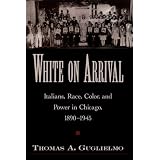
White on Arrival: Italians, Race, Color, and Power in Chicago, 1890-1945 Review

White on Arrival: Italians, Race, Color, and Power in Chicago, 1890-1945
Average Reviews:

(More customer reviews)
Are you looking to buy White on Arrival: Italians, Race, Color, and Power in Chicago, 1890-1945? Here is the right place to find the great deals. we can offer discounts of up to 90% on White on Arrival: Italians, Race, Color, and Power in Chicago, 1890-1945. Check out the link below:

>> Click Here to See Compare Prices and Get the Best Offers

White on Arrival: Italians, Race, Color, and Power in Chicago, 1890-1945 ReviewThis is one of the best books I've read this year. Written in a lively and engaging manner, this book powerfully documents how immigrants have experienced and lived race in the US. With chapters on gangsters, race riots, fascism, tensions over public housing, labor unions, and international relations, this book is FILLED with riveting stories that force the reader to consider the role of everyday working-class folks in perpetuating and challenging white supremacy. The author's goal is to make us think critically about how we have arrived at our contemporary reality -- where race structures so much of our daily lives -- by examining how the descendents of impoverished and often marginalized European immigrants have played a role in keeping that structure in place. This is an incredible book!! I recommend it to anyone who loves a good story, but also to those who are looking for historical background to current debates over affirmative action, reparations, and anti-racist collective action.... and anyone who wants some factual info to support your arguments with family & friends who insist that "we" (meaning "white ethnics") had is "as bad" as "them" (people of color). This author finally lays this argument to rest once and for all (thankfully) by showing how the color line ensured that Italians had a leg up, and that their "whiteness" became their most valuable asset in a country so deeply defined by race.White on Arrival: Italians, Race, Color, and Power in Chicago, 1890-1945 Overview

Want to learn more information about White on Arrival: Italians, Race, Color, and Power in Chicago, 1890-1945?

>> Click Here to See All Customer Reviews & Ratings Now
Read More...